
 Deutsch
 English

First aid
First aid is a topic that concerns everyone: as a general rule, everyone must provide first aid within the scope of their capabilities.
The most important rules of conduct when finding an injured person are
- Keep calm / secure the accident site / ensure your own safety
- Check consciousness / breathing
If consciousness / breathing is not present:
- Call for help / call 112 / first aiders
- Cardiopulmonary resuscitation
- Get an AED
The first aid poster must be filled out digitally and should be displayed in every area, at least near the first aid kit / first aid box:
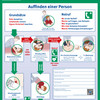
The accident prevention regulation DGUV Information 204-022 "First aid in the workplace" specifies the mandate given in SGB VII to the statutory accident insurance institutions to provide effective first aid. It serves as a guide and decision-making aid. The aim is to give employers, their representatives, company doctors and prevention experts a greater understanding of first aid issues and to provide them with suggestions for their work. It also serves as a reference work.
Accidents (work, sports, and commuting accidents) must be reported to the supervisor as soon as possible.
1. Reportable accidents must be reported to the accident insurance institution (state accident insurance fund) within three days. Reportable accidents occur when employees are killed or so seriously injured that they are unable to work for more than three days (calendar days). Further procedures are in accordance with the TUC schedule.
The reporting of accidents involving civil servants differs fundamentally from that of other employees. Civil servants are not subject to the regulations of the National Accident Insurance Fund. Further details on occupational accidents can be found in the information sheet on the granting of occupational accident benefits in accordance with Section 37 of the Lower Saxony Civil Service Pensions Act (NBeamtG) and the accident report form. The information sheet and form are available on the website of the Lower Saxony Regional Finance Directorate – State-wide Remuneration and Pension Office.
2. Accidents that do not have to be reported (= minor injuries) must be recorded in the first-aid book, which must be displayed in every area (it is recommended to have several blank copies in the first-aid box). This template can be used as a first-aid book. Completed documents must be stored securely for data protection reasons (e.g., in the secretariat). The retention period is 5 years.
Further useful links:
- Notification of accidents at work at the TUC – procedure (Presidential Board letter dated 18.01.2011)
- Accident report/accident questionnaire for employees (site number: 38800122001)
- Accident report for civil servants
Everyone is obliged to provide first aid!
In addition, a certain number(see FAQ No. 17) of trained first aiders must be available for each area of TU Clausthal. The first aid training of first aiders should be repeated at least every two years.
First aiders perform the following tasks for your area:
- Regularly checking the number and usability of first aid equipment (e.g. dressing material, stretchers)
- advising the respective facility on the implementation of first aid in the company(DGUV Information 204-022), if necessary after consultation with the company medical service / safety specialist
- At the invitation of the university management, the first aid officers take part in central events, in particular training and further education events
- With this DGUV checklist, first aiders/responsible persons can easily check the implementation of first aid regulations in their area
Information for first aiders during the coronavirus pandemic
- Action guide for first aiders in companies in the context of the corona (SARS-CoV-2) pandemic
- Action guide for companies in the context of the corona (SARS-CoV-2) pandemic
Further useful links for first aiders
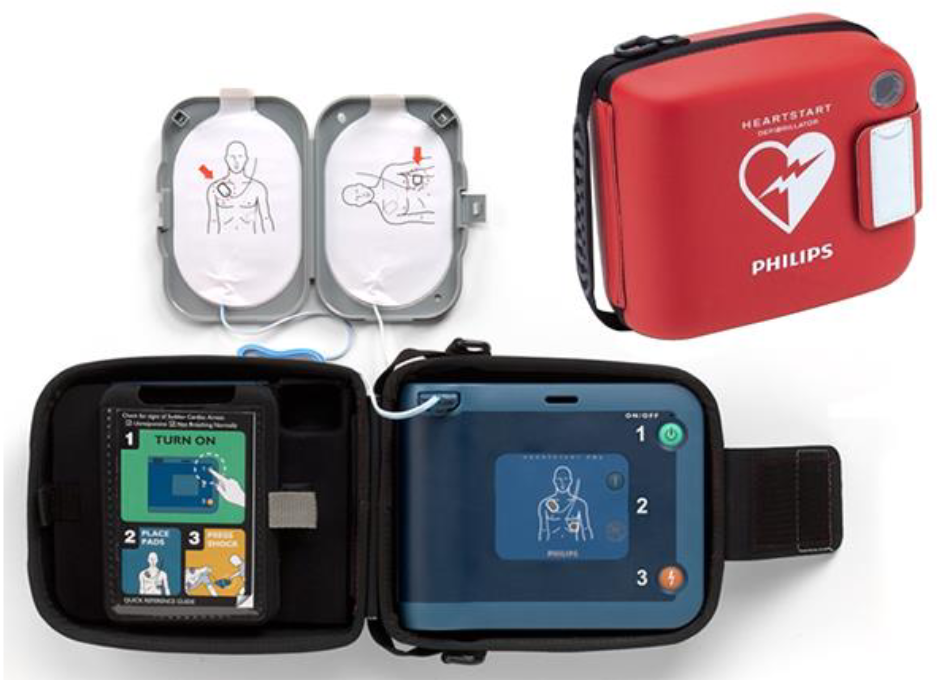
Defibrillators are available at various locations on the TU Clausthal campus to assist an affected person in an emergency.
The automated external defibrillator (AED, lay defibrillator) is particularly suitable for lay rescuers due to its design and functionality. The devices determine whether a shock is necessary and appropriate without the first aider needing to intervene, which prevents incorrect operation. Depending on the model, a shock is delivered either automatically or by pressing a button ("semi-automatic"). The energy delivered during the shock is also determined by the AED. First aiders only need to follow the mostly audible instructions, such as performing cardiopulmonary resuscitation (CPR) or adjusting chest compressions during rhythm analysis or shock delivery, and, if necessary, keep a safe distance from the patient.
Please note that a medical device log must be kept for each defibrillator.
Further useful links on the use of defibrillators:
- DGUV Information 201-010 "Automatic defibrillation"
- Template for operating instructions
- Video: How to use a defibrillator
- Philips maintenance instructions for defibrillators
Contact persons: First aid
The first point of contact for information on first aid are the first aiders in your facilities.
Designated doctor in the region
Dr. Mohamed Diab, MD
Windmühlenstraße 1
38678 Clausthal-Zellerfeld
Phone:
Important documents
- First Aid Checklist
- Accident Report (redirects to the Lower Saxony State Accident Insurance Fund)
- First Aid Record Book
- Locations of Defibrillators
- Directive on Occupational Safety and Environmental Protection at TU Clausthal
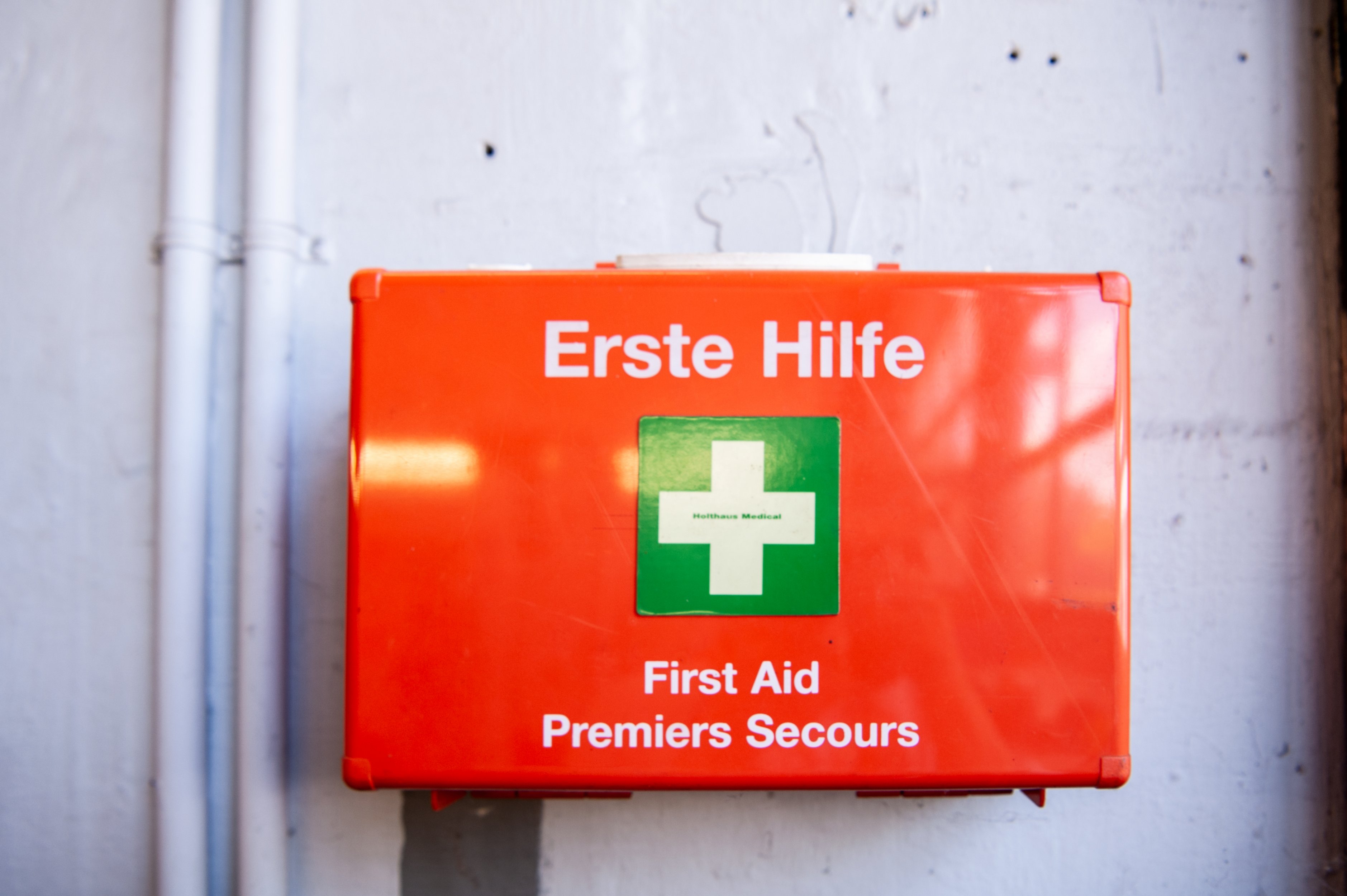
First aid supplies
Guidelines for the contents of first aid kits