
 Deutsch
 English

Risk assessments
On this page, we would like to provide you with some information and templates to help you prepare risk assessments. If you have any questions, you can of course contact us at any time (see sidebar for contact details).
Please note: The ArbSchG does not prescribe any specific rules as to what a risk assessment must look like. The scope and content of the risk assessments depend on the specific operational conditions and must be determined on a case-by-case basis.
The following information is intended to assist you in preparing them.
General information on risk assessments
The risk assessment is a central element of occupational health and safety and comprises the assessment of the hazards and stresses associated with the employees' work. It is an important basis for supervisors for targeted occupational health and safety measures. The legal basis can be found in §§ 5, 6 ArbSchG.
Based on the results of the risk assessment, the necessary measures to improve occupational health and safety must be defined.
The employer has a duty to ensure that its employees are not exposed to any hazards while at work.
The TUC has transferred these duties to line managers(delegation letter). According to this, managers must, among other things, assess the hazards for employees in their area of responsibility. They are supported in this by the safety officers and safety specialists.
Within this framework, employees also have a duty of cooperation and care in their dealings with each other.
In short, everyone involved must work closely together to prevent accidents and emergencies.
The 7 steps to creating a risk assessment
- Determination of the work areas to be assessed (e.g. office, laboratory, warehouse, workshop)
- Determination of the activities to be assessed (e.g. electrician, chemical laboratory technician, car mechanic, etc.)
- Compilation of applicable occupational health and safety regulations and technical rules
- Checking existing documents (e.g. existing inspection reports, inspection measurement reports, hazardous substance lists, operating instructions, etc.)
Potential hazards and stresses in the workplace must be identified during the risk analysis. They begin with a joint inspection by the respective supervisors and their employees. If necessary, the relevant safety expert should be consulted.
Particular attention must be paid to possible hazard factors (e.g. mechanical factors, electrical hazards, hazardous substances, hazards from fire and explosion, hazards from the workplace environment).
The assessment must be carried out on an activity-related basis, whereby the areas mentioned must be considered in context. According to Section 5 (3) ArbSchG, hazards can arise in particular from
- the design and layout of the workplace,
- physical, chemical and biological effects,
- the design, selection, use and handling of work equipment and materials,
- the design of work and production processes, work sequences and working hours and their interaction,
- inadequate qualification and instruction of employees.
The hazards identified in step 2 must be systematically assessed to determine whether the measures already taken are sufficient or whether further occupational health and safety measures are required. The hazards must be assessed both individually and in context.
In order to better assess the hazard, factors such as the probability of occurrence and the possible severity of the damage must be taken into account (risk assessment). The aim is to keep the risk as low as possible or to reduce it to an acceptable level (e.g. using the NOHL risk matrix).
Once a risk has been identified that is no longer acceptable, measures must be taken to reduce or avoid the risk.
The following hierarchy of measures can be helpful in identifying which measures need to be taken:
Level 1: Elimination of the source of danger
Level 2: Elimination of the hazard through technical measures
Level 3: Organizational measures (spatial and temporal separation from the source of danger)
Level 4: Personal protective equipment (PPE)
Level 5: Behavioral measures (e.g. instructions, qualification of employees)
The effectiveness of the measures decreases continuously from level 1 to 5. It is therefore always necessary to check whether a more effective measure should be selected.
It may be necessary to train and instruct employees with regard to the specified measures.
The health and safety measures defined in step 4 must be implemented according to their effectiveness.
In the case of extensive measures, an action plan in which implementation dates and responsibilities are defined could be helpful.
The measures defined in step 4 must be reviewed. It must be checked whether they have been fully implemented and have led to the elimination or sufficient reduction of the hazards and whether any new hazards have arisen.
If necessary, the steps must be repeated if the protection goals have not been achieved despite implementation of the measures.
The risk assessment must be adapted in the event of operational changes or new findings with regard to health and safety
According to § 6 ArbSchG, the result of the risk assessment, the measures determined by it and the result of the review must be documented.
You can use this template(Beispiel_Dokumentation Gefährdungsbeurteilung) for this purpose.
Tools for creating a risk assessment
Here you will find a detailed description of the procedure for preparing the risk assessment. Among other things, the entire document provides you with assistance in completing
1. the templates
2. the hazard catalog (including explanations of the hazard factors, examples and a list of sources). Alternatively, the following detailed hazard catalog can also be used.
Contact person
If you have any questions, please contact:
Dipl. Ing. Cyrus Samawatie
Telephone: +49 53 23 / 72-35 35
Mail: cyrus.samawatie@tu-clausthal.de
Flemming Gloyer
Telephone: +49 53 23 / 72-30 22
Mail: flemming.gloyer@tu-clausthal.de
Important documents
- Example_Documentation Risk Assessment (GefDok Excel)

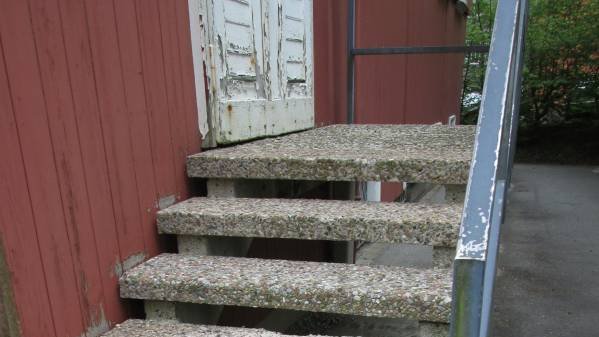
Examples of hazards
Here are some examples of obvious hazards.